
🚨 Resto Clean's Homeowner Flood Guide
What Every Treasure Valley Homeowner Should Know After a Major Storm
The last 24 hours have been unlike anything we've seen in quite some time.
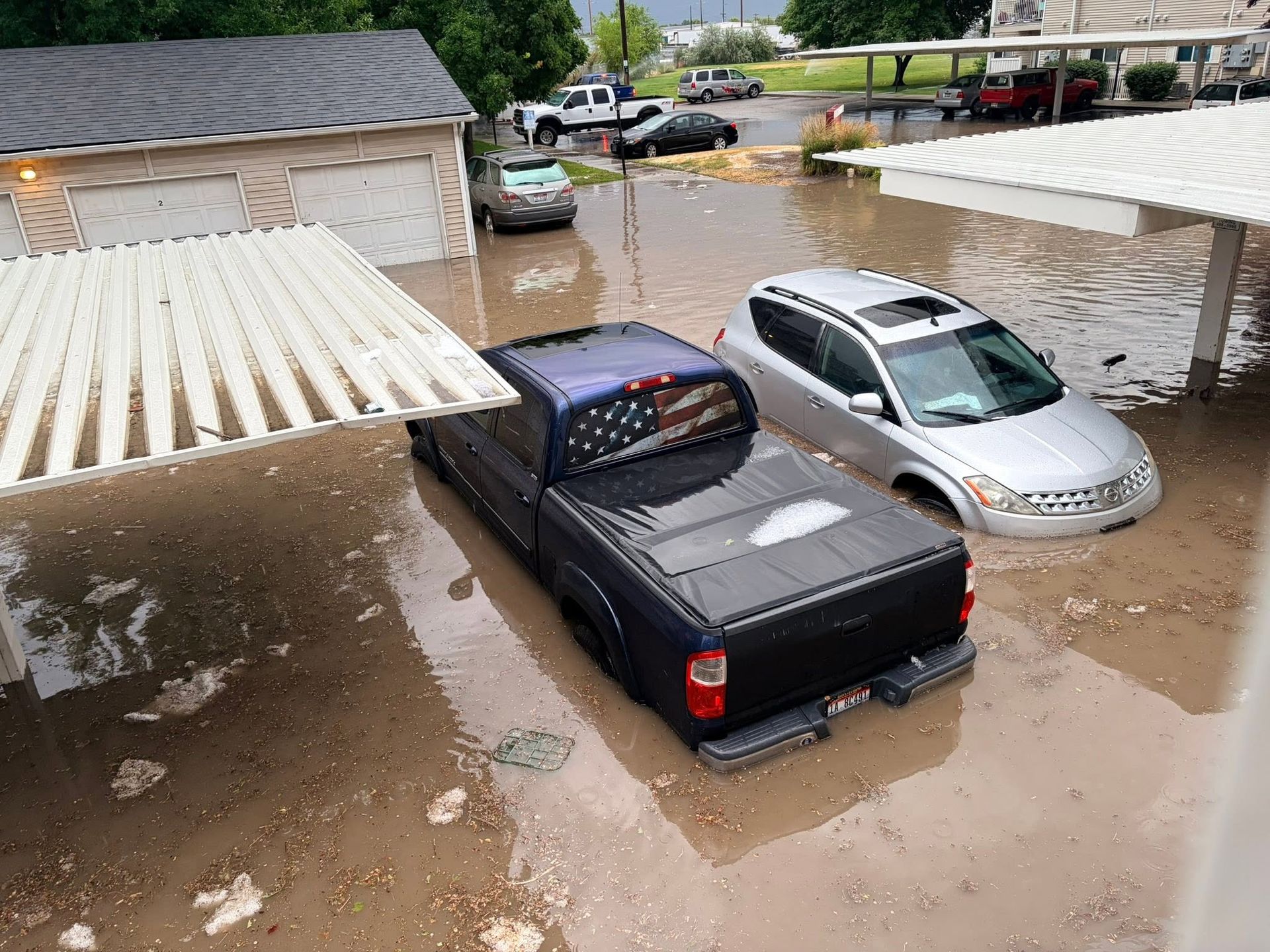
Heavy rain and hail overwhelmed storm drains, flooded neighborhoods, and left many Treasure Valley homeowners dealing with water where it doesn't belong.
Our crews have been responding throughout the Treasure Valley, and we wanted to put together a practical guide to help homeowners minimize damage while waiting for professional assistance.
Flooded Crawlspaces
One of the first places you should check after heavy rain is your crawlspace.
Many homeowners don't realize water can accumulate underneath their home long before it's visible inside.
What to Do
• Open your crawlspace access and inspect for standing water.
• If you see water, don't panic. During major rain events, many crawlspaces naturally drain as groundwater recedes. Monitor the level every few hours. If it's going down, that's a great sign.
• If standing water is more than 6 inches deep, consider using a sump pump. Discharge the water well away from your home's foundation. During emergency flooding, pumping toward the street may be appropriate if it won't impact neighboring properties and local conditions allow.
Flooded Basements
Safety First
If water has reached electrical outlets, appliances, or your electrical panel, do not enter the water.
Turn off the breaker to the affected area only if it can be done safely.
Never stand in water that may be energized.
Remove Standing Water
If the water is shallow enough to safely access, remove the filter from your wet/dry shop vacuum and begin extracting water.
Every gallon removed is one less gallon soaking into your home.
If your plumbing is functioning normally, you can empty the water into a toilet or floor drain.
Using a Sump Pump
If your basement has significant flooding, don't pump all of the water out at once.
When the soil outside is saturated, groundwater places tremendous pressure against your foundation walls.
Removing water too quickly can create a pressure imbalance that may damage foundation walls.
A commonly recommended guideline is to lower the water level about one foot every two hours, allowing groundwater pressure to decrease gradually.
Protect Your Belongings
The faster you move items out of standing water, the better.
• Move furniture, rugs, and personal belongings to a dry area.
• If furniture can't be moved, place wood blocks, plastic blocks, or aluminum foil beneath the legs to minimize moisture damage.
• Remove wet area rugs and anything else that traps moisture against the floor.
Help Your Home Dry Faster
One of the biggest mistakes homeowners make is setting a fan in the middle of a wet room and hoping for the best.
Here in the Treasure Valley, we're fortunate to have a dry climate after storms.
Take advantage of it.
Place one fan blowing out of a window or exterior door.
Open another window or door on the opposite side of the home.
This creates an air exchange, pulling dry air through the house while exhausting humid air outside.
This method is often much more effective than simply pointing a fan at the wet floor.
If you have dehumidifiers, run them continuously after the standing water has been removed.
Remember, drying isn't just about removing visible water—it's about removing moisture trapped inside walls, flooring, framing, and the air.
Insurance Alert
One of the biggest misconceptions after a storm is that all water damage is covered by homeowners insurance.
Unfortunately, that's not always true.
Water entering your home from surface flooding or rising groundwater is often not covered under a standard homeowners insurance policy unless you carry separate flood insurance.
However, don't assume you aren't covered.
If wind or hail damaged your roof or another part of your home and rain entered through that opening, your homeowners policy may provide coverage.
Every policy is different, so it's always worth contacting your insurance company before making assumptions.
If this storm is eventually declared a state disaster or receives a federal disaster declaration, financial assistance through FEMA or other disaster relief programs may become available.
Until You Know...
Take lots of photos and videos.
Save receipts for emergency expenses.
Contact your insurance company.
Take reasonable steps to prevent additional damage.
If Your Damage Isn't Covered by Insurance
Not every homeowner has flood insurance or the ability to hire a restoration company immediately.
If you're handling the cleanup yourself, these tips can help minimize damage.
Document Everything
Take photos before, during, and after cleanup.
Photograph:
- Every affected room
- Water levels
- Flooring
- Furniture
- Cabinets
- Personal belongings
- Electronics
- Exterior flooding
If items are ruined beyond repair, make a written inventory.
You can never have too much documentation.
Remove Bulk Water
The more water you remove today, the less damage you'll have tomorrow.
Use:
- Wet/dry shop vacuums
- Sump pumps
- Towels
- Mops
- Buckets
Every gallon helps.
Remove Baseboards Carefully
If you're planning to dry the walls yourself, remove the baseboards.
Before removing them, use a utility knife to cut the paint or caulking along the top edge.
This prevents the drywall paper from tearing and makes reinstalling the baseboards much easier.
Label each piece so it goes back where it came from.
Evaluate Flooring
Not every floor needs to be removed.
Some flooring can be dried successfully while others trap moisture underneath.
If you're unsure, ask before tearing it out.
Dry the Wall Cavities
If water entered the wall cavity, small weep holes drilled below the baseboard line can help trapped moisture drain and improve airflow.
Keep the holes below the baseboard so they'll be hidden when the trim is reinstalled.
Monitor Moisture
You can purchase an inexpensive moisture meter at most home improvement stores.
Most work well on:
- Drywall
- Wood framing
- Baseboards
- Subfloors
Before checking damaged materials, take readings from an unaffected area of your home.
This gives you a dry baseline to compare against as materials dry.
Keep Taking Pictures
Document everything throughout the cleanup process.
Take pictures after demolition, after drying equipment is installed, and once the work is complete.
Need Help? Call Us.
Even if your damage isn't covered by insurance and you don't plan to hire us immediately, call us anyway.
We'll help you prioritize the next steps, answer your questions, and start a consulting plan tailored to your situation.
If needed, we'll place your home on our response schedule so we can return to:
- Monitor moisture levels
- Complete remaining water extraction
- Set professional drying equipment
- Perform mitigation services
- Verify your home is completely dry before reconstruction begins
Even if we can't be there immediately, we'll help you like we're already there.
Thank You, Treasure Valley
One of the best parts of this storm wasn't the weather—it was watching our local restoration community come together.
A heartfelt thank you to System Kleen, Filthy Clean, and Faithful Carpet Cleaning for partnering with us to help homeowners throughout the Treasure Valley.
Instead of worrying about competition, everyone focused on what mattered most—helping our neighbors.
That's what makes this community so special.
From All of Us at Resto Clean
We love the Treasure Valley, and we're proud to call it home.
Whether you need emergency services, professional consulting, or simply someone to answer your questions, we're here to help.
Our goal isn't just to restore homes—it's to give homeowners the knowledge and confidence to make the best decisions possible during a stressful time.
Stay safe, Treasure Valley.
— The Resto Clean Team
#RestoClean #TreasureValley #FloodCleanup #WaterDamage #IdahoStrong #CommunityFirst #EmergencyRestoration #NeighborsHelpingNeighbors